
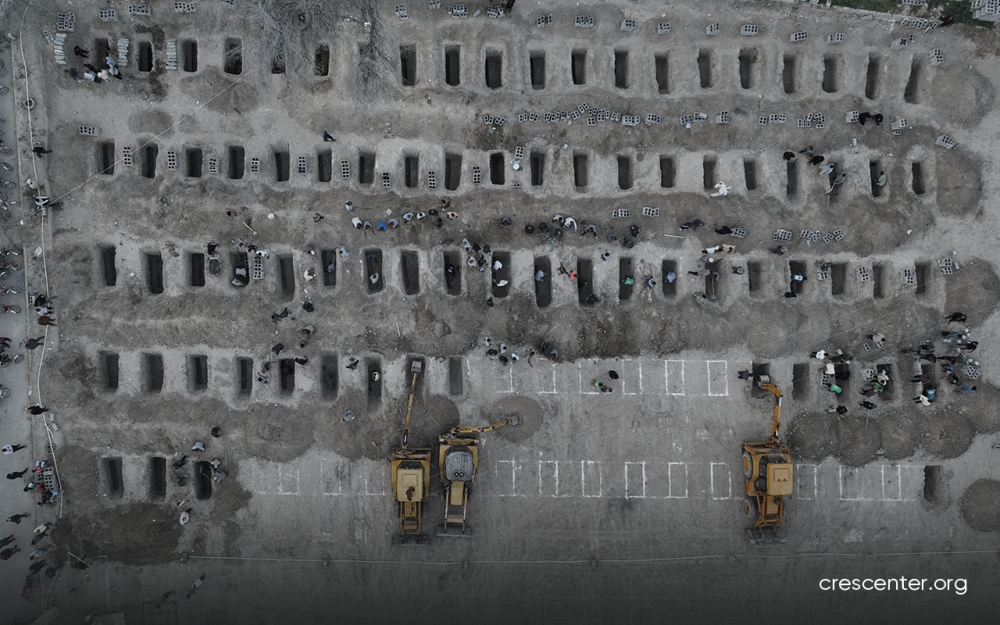
The targeting of the Minab school on the first day of the US-Israel war against Iran, if proven to be an intentional strike, constitutes a grave breach of international humanitarian law (IHL) and a war crime under the fundamental principle of distinction. This paper assesses the legal feasibility of pursuing international accountability for this incident. It examines two primary mechanisms: initiating legal proceedings before the International Court of Justice (ICJ) and individual criminal responsibility before the International Criminal Court (ICC). The analysis reveals that while the substantive norms violated are peremptory, profound procedural and evidentiary hurdles render both mechanisms highly problematic.
Under International Humanitarian Law (IHL), the principle of distinction mandates that parties to a conflict must at all times distinguish between the civilian population and combatants. The deliberate targeting of educational facilities, such as the Minab school, prima facie violates this principle and qualifies as a war crime. Assuming the factual premise of an intentional strike is established, the international community and the injured State face the challenge of selecting the appropriate legal forum.
State Responsibility Before the ICJ: The Supremacy of Consent Over Jus Cogens
The first theoretical mechanism is the invocation of State responsibility before the International Court of Justice (ICJ). The ICJ is the principal judicial organ of the United Nations, tasked with settling legal disputes submitted by States (ICJ Statute, Article 34). However, pursuing this route requires overcoming a fundamental jurisdictional paradox.
For the ICJ to exercise jurisdiction, there must be a recognized jurisdictional basis, rooted primarily in the consent of the States involved. In the context of the Minab incident, there is no bilateral or multilateral treaty between Iran and the United States that specifically confers jurisdiction to the ICJ over war crimes or IHL violations.
A common jurisprudential argument posits that the prohibition of attacking civilians is a norm of jus cogens (a peremptory norm) and entails obligations erga omnes (owed to the international community as a whole). Therefore, it is argued, the ICJ should inherently possess jurisdiction to adjudicate such violations.However, international jurisprudence strictly distinguishes between the substantive nature of a rule and the procedural basis for adjudicating its breach. The ICJ has explicitly ruled that the peremptory character of a norm does not automatically confer jurisdiction upon the Court. In the East Timor (Portugal v. Australia) case, the Court held that the erga omnes character of a norm cannot, in itself, provide a basis for jurisdiction (para. 29). This was reaffirmed in Armed Activities on the Territory of the Congo (DRC v. Rwanda), where the Court categorically stated that "the fact that a dispute relates to compliance with a norm having the character of jus cogens cannot be regarded as giving the Court a basis of jurisdiction which it would otherwise lack" (para. 64). Thus, the substantive violation of a peremptory norm cannot bypass the procedural requirement of State consent.
The United States' Jurisdictional Posture
Examining the United States' acceptance of the ICJ's jurisdiction confirms the foreclosure of this mechanism. The U.S. initially accepted the compulsory jurisdiction of the Court under the "Optional Clause" (Article 36(2) of the ICJ Statute). However, following the Court's 1984 ruling on jurisdiction in the Nicaragua v. United States case, the U.S. formally withdrew its declaration of acceptance of compulsory jurisdiction in 1986. Furthermore, the U.S. maintains broad reservations regarding multilateral treaties. Consequently, there is no active declaration or treaty basis through which the U.S. can be hauled before the ICJ for this incident.Consequently, due to the strict requirement of State consent and the U.S. withdrawal from the Optional Clause, the avenue for filing a legal claim for State responsibility at the ICJ is jurisdictionally unfeasible.
Criminal Responsibility Before the ICC: Navigating the Jurisdictional Void for Non-States Parties
The second mechanism for accountability is the prosecution of individuals for war crimes before the International Criminal Court (ICC), governed by the Rome Statute.
The primary structural obstacle is that neither Iran, the United States, nor Israel is a State Party to the Rome Statute. Consequently, under Article 12(1), the ICC lacks automatic jurisdiction over crimes committed on their territories or by their nationals.
Exceptional Pathways to Jurisdiction over Non-State Parties
Despite this fundamental barrier, the Rome Statute provides two exceptional mechanisms under Article 13 to trigger the Court’s jurisdiction over non-State parties. Evaluating both is essential for a realistic legal assessment:
1. Referral by the United Nations Security Council (Article 13(b))
Under Article 13(b), the UN Security Council, acting under Chapter VII of the UN Charter, can refer a situation to the ICC Prosecutor, regardless of the nationality of the perpetrators or the location of the crimes (as seen in the referrals of Darfur in 2005 and Libya in 2011).
While legally viable, this pathway is a political non-starter in this context. The United States holds permanent membership and veto power in the Security Council. Any draft resolution attempting to refer a situation involving U.S. military actions or personnel to the ICC would be summarily vetoed, effectively neutralizing this mechanism.
2. Ad Hoc Acceptance of Jurisdiction (Article 12(3))
Given the impossibility of a Security Council referral, the only theoretically viable legal pathway is for the territorial State to voluntarily accept the Court's jurisdiction. Under Article 12(3) of the Rome Statute, a State that is not party to the Statute may, by declaration, accept the exercise of jurisdiction by the Court with respect to specific crimes.
This mechanism has established a strong precedent in recent international practice. Notably, Ukraine, despite not being a State Party, lodged declarations under Article 12(3) in 2014 and 2015, accepting the ICC's jurisdiction over alleged crimes committed on its territory. This directly paved the way for the Court's ongoing investigations (ICC Statement on Ukraine). Similarly, Palestine lodged an Article 12(3) declaration in 2015 prior to its formal accession, which the Pre-Trial Chamber subsequently validated.
If Iran were to lodge a similar ad hoc declaration specifically regarding the Minab incident, it would successfully trigger the territorial jurisdiction of the Court under Article 12(2)(a), as the alleged crime was committed on the territory of a State (Iran) that has formally accepted the Court's jurisdiction for that specific situation.
However, unlocking the jurisdictional door at the ICC via an Article 12(3) declaration does not guarantee a successful prosecution. Immense evidentiary and practical hurdles remain:
- Proving Mens Rea (Mental Element): Under Article 30 of the Rome Statute, criminal responsibility requires that the material elements of the crime be committed with "intent and knowledge." The ICC does not prosecute mere negligence, accidents, or collateral damage absent a clear criminal policy. If the defense argues that the strike was the result of a technical malfunction, a "friendly fire" incident during a military exercise, or an intelligence failure rather than a deliberate attack on a civilian object, the Prosecutor faces a monumental burden of proving specific intent (dolus directus or dolus eventualis).
- Chain of Command and Attribution: Establishing the exact chain of command, identifying the specific individuals who planned, ordered, or executed the strike, and proving their individual criminal responsibility requires access to highly classified military intelligence, operational logs, and communications.
- Lack of State Cooperation: As a non-State Party, the United States is under no legal obligation to cooperate with the ICC. The practical reality of securing evidence, arresting suspects, or compelling witness testimony from a non-cooperative superpower presents a near-insurmountable operational barrier for the Office of the Prosecutor, as historically demonstrated by U.S. pushback against ICC investigations in Afghanistan.
While an ad hoc declaration under Article 12(3) provides the only theoretically viable jurisdictional basis for the ICC to investigate the Minab incident, the severe evidentiary challenges - particularly regarding the proof of criminal intent and the absolute lack of State cooperation - make a successful criminal prosecution highly improbable.
Conclusion: While the prohibition against targeting civilian infrastructure constitutes a norm of jus cogens with erga omnes character, the ICJ's jurisdictional architecture remains strictly consent-based. The United States' withdrawal from compulsory jurisdiction and the absence of any treaty basis create an insurmountable procedural barrier, rendering the judicial enforcement of substantive IHL violations effectively impossible at the ICJ.
The fact that Iran, the United States, and Israel are not States Parties to the Rome Statute eliminates automatic jurisdiction. A Security Council referral - the only mechanism that could bypass this barrier - is foreclosed by the veto power of the United States. The sole theoretically viable pathway - an ad hoc declaration under Article 12(3) by Iran - faces severe practical limitations: the monumental burden of proving criminal intent (mens rea) against defenses of accident or technical malfunction, the absence of cooperation from the accused State, and the operational challenges of investigating a superpower's military actions.
Sara Famoori