How might the Iran crisis reshape Italy’s strategic priorities in the Mediterranean, especially regarding regional stability, maritime security, and migration flows?
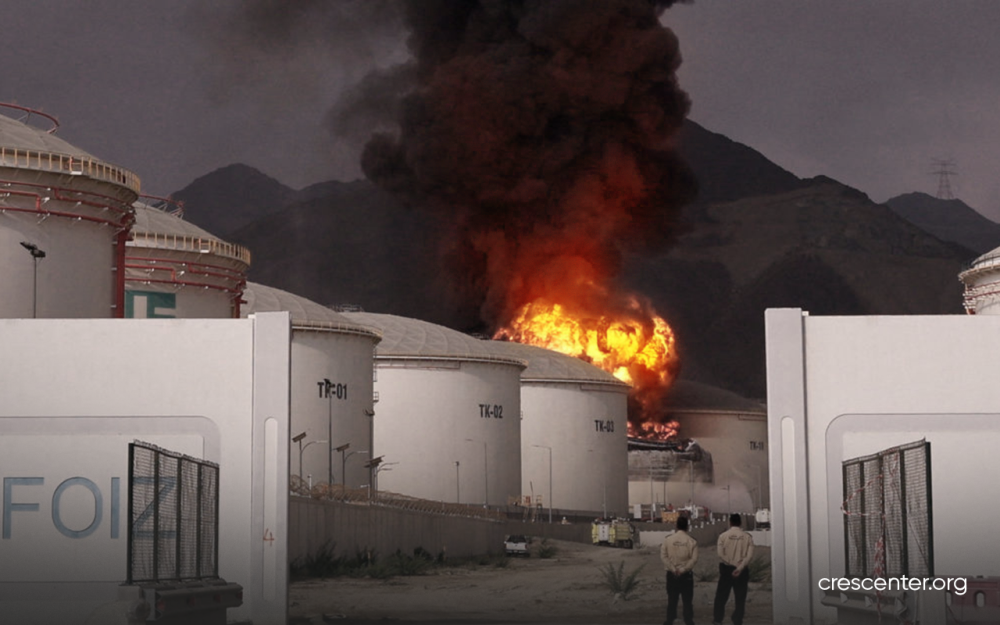
Saudi Arabia, the United Arab Emirates, Kuwait, Iraq, and Iran export a large portion of their crude oil through the Strait of Hormuz, which carries a significant share of the world's oil and liquefied natural gas. The closure of the strait is one of the most feared scenarios for international trade and energy markets, and it risks triggering one of the largest oil price shocks in recent years. With this war against Iran, the price of crude oil and liquefied natural gas has already increased following Qatar's announcement to halt LNG production. Even without a complete closure, attacks, mines, interference, and insurance problems are slowing traffic. Unlike previous clashes, this time the conflict is more intense, and Iran has responded by striking military and civilian targets across the Middle East. This increases uncertainty and tension in the markets.
Italy has not shown any particular foresight; rather, it appears to be "navigating by sight," seeking a mediation role and avoiding a total regional escalation. However, Rome promotes processes under the auspices of the UN and considers Europe's role as a political guarantor to be central (as we know, Europe is divided). Furthermore, a military reorientation is underway, as the missile threat from Tehran has already prompted Italy to reconsider the deployment of its contingents, including the partial transfer of troops from Iraq to better protect assets in the Mediterranean.
Since the Gulf container terminals are in crisis, negatively impacting the Italian supply chain, protecting maritime lines of communication is now the priority to safeguard the national economy.
Instability and the Iranian crisis are also exacerbating the dynamics affecting migration routes, increasing social and economic pressure on the Italian reception system and overloading the Eastern Mediterranean route, with direct consequences for Italy as the primary European port of call. However, Italy is taking steps to stabilize legal flows, planning nearly 500,000 entries over the three-year period 2026-2028 to fill labor shortages.
Could prolonged instability involving Iran alter Italy’s defense posture?
Prolonged instability in Iran would have a significant impact, affecting its defensive posture, the security of Italian foreign missions, and Italy's role in the "Expanded Mediterranean."
Italy is already facing the first signs of the military escalation between the US/Israel and Iran. For example, the base in Kuwait hosting approximately 300 Italian Air Force personnel was hit, raising alert levels. Although Italy is pursuing a de-escalation strategy and is not providing full political support for the military offensive, the government has increased its focus on sensitive areas linked to the United States (military bases) and Israel on Italian soil. Italy is therefore engaged in a determined defensive posture, but is also bound by its alliance commitments with the US and NATO.
I live in Trieste, near the Aviano base, and the city, along with the entire Friuli Venezia Giulia region, is very alarmed and concerned.
What risks and opportunities does the crisis create for Italy’s economic relations in the region, particularly in trade, infrastructure, and energy cooperation?
According to the Ministry of Foreign Affairs and International Cooperation, the immediate risks concern the safety of Italian citizens in the area due to the closure of airports, which required the activation of the Gulf Task Force to assist Italians stranded in the region. There are also logistical risks for tourism, which are impacting travel costs, with an impact estimated by some industry associations at up to €33 billion for Italy.
But I want to focus especially on the instability of maritime trade and the ongoing tensions in the Red Sea, which began in 2023 and threaten the implementation of the IMEC (or Cotton Route) project, a multinational rail and maritime economic corridor, with a proposed outlet at the port of Trieste. This is the India-Middle East-Europe Corridor, presented on September 10, 2023, during the G20 summit in New Delhi by the governments of India, the United States, the United Arab Emirates, Saudi Arabia, France, Germany, Italy, and the European Union. It is now concretely clear that the Gulf states interested in the passage and financing of the IMEC project are currently unable to mobilize decision-making processes, financial resources, will, and intermediate implementation perspectives. This is also because these lines to the port of Haifa—a strategic military hub for Israel and the United States—would pass through areas that are already highly at risk due to security, war, and terrorism.
Maria Morigi
Head of The Middle East department at Centro Studi Eurasia e Mediterraneo (CeSEM)