
Rasht–Astara and Pakistan's Place on the Shifting Map of Eurasian Transit
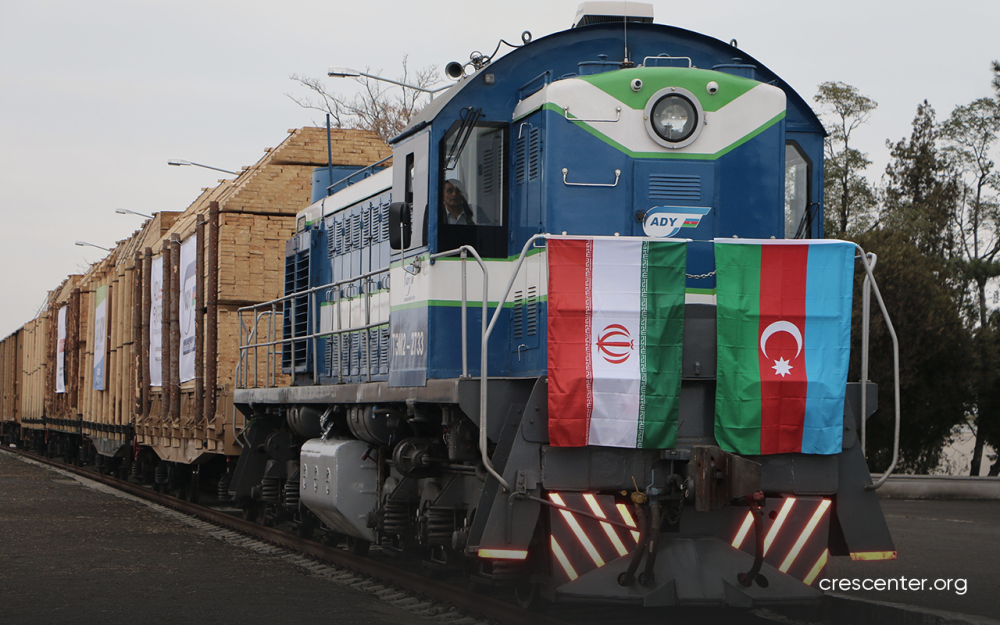
On 4 November 2026, Iran handed Russia the final 37 kilometres of land for the Rasht Astara railway in Gilan province, opening the full 162-kilometre route to Russian survey teams. The step completes the groundwork for the last missing link of the International North–South Transport Corridor (INSTC). For Pakistan, which has long presented itself as Central Asia's natural gateway to the sea, the development has direct implications.
This analysis examines what the handover means from Islamabad's vantage point: where it challenges Pakistan's connectivity ambitions, where it opens new possibilities, and which factors are likely to shape the outcome.
What the handover completes
Rasht–Astara is the last missing rail segment on the western branch of the International North–South Transport Corridor (INSTC). That branch runs from Russia through Azerbaijan to Iran and on to Iran's Gulf ports. Russia and Iran signed the construction agreement in May 2023. Under it, Russia is expected to provide about €1.3 billion.
Iran transferred the first 125 kilometres of land in February 2026 and the remaining stretch this month. According to reports, geotechnical drilling is under way, Iranian contractors are expected to take part in construction, and a final commercial agreement has yet to be signed. The original construction schedule was 48 months, so even under favourable conditions the line is a medium-term project.
What is at stake for Pakistan
For Russia, the INSTC is a southern outlet at a time when many of its westward routes are restricted. For Iran, it brings transit revenue and a stronger role as a north–south land bridge. Azerbaijan, whose rail network already reaches the Iranian border at Astara, gains a more valuable transit position. Each of these shifts has consequences for Pakistan.
The first is competition. Pakistan's ports at Karachi, Port Qasim and Gwadar are, in principle, the closest outlets to the sea for much of Central Asia. A completed INSTC would give Kazakh, Uzbek and Turkmen exporters a functioning alternative through Iran, and Central Asian states would gain leverage in negotiating tariffs and transit terms with Islamabad. Cargo that settles into Iranian or Caspian routes in the coming years may be hard to win back.
The second is opportunity. Pakistan is already connected to Iran by rail and road through Balochistan. If those links are upgraded and backed by transit arrangements, the INSTC could become a route for Pakistani goods to reach Central Asia and Russia overland, independent of conditions in Afghanistan. Pakistan's own trade with Central Asia and Russia, not only transit through its ports, could benefit.
The third is diplomatic. Prime Minister Shehbaz Sharif is reportedly expected to visit Moscow from around 30 November, although the dates have not been officially confirmed. Whether connectivity, including the INSTC, features on the agenda of that visit will indicate how far the two sides see shared interests in southern corridors.
Pakistan's position among competing routes
Central Asian shippers now weigh three broad options for reaching the sea. The Middle Corridor runs west across the Caspian to Azerbaijan, Georgia and Türkiye. The INSTC runs south through Iran, along its eastern branch or, once Rasht–Astara is built, its western branch through Azerbaijan. The third, the trans-Afghan route to Pakistan's ports, offers Uzbekistan and its neighbours the shortest overland path to the Arabian Sea.
Pakistan's strength lies in geography and in the institutional groundwork it is now laying. At the Tianshan Forum in Almaty on 2 November, Islamabad presented Karachi, Port Qasim and Gwadar to Central Asian investors as strategic gateways. Kazakhstan ratified a customs cooperation agreement with Pakistan on 5 November, and Pakistani customs officials studied transit controls at Turkmenistan's Turkmenbashi port on 8 November. These steps build the procedures that any working corridor requires.
Pakistan's weakness lies in the physical link. The Uzbekistan–Afghanistan–Pakistan railway has had a feasibility agreement since July 2025 but still lacks construction financing. While Russia is already surveying Rasht–Astara with its own funds, Pakistan's flagship corridor is still searching for lenders. In a market where shippers choose on cost, transit time and reliability rather than distance alone, that gap matters.
Pakistan's own interest in the INSTC
Pakistan is not only a potential competitor of the INSTC; it has also sought to join it. In June 2024, Pakistan's ambassador to Russia said Islamabad had agreed in principle to Moscow's invitation to take part in the corridor, and noted that a first shipment of Pakistani citrus had reached Dagestan via Iran and Azerbaijan. In May 2026, at the Kazan Forum, Special Assistant to the Prime Minister Talha Burki proposed linking the corridor to Gwadar, and Russian Deputy Prime Minister Alexei Overchuk confirmed that the two sides were discussing options, including rail links. In June 2026, Federal Minister Awais Leghari said Pakistan intends to join the INSTC.
Practical steps have followed. According to reports, the two countries agreed in December 2025 to continue test cargo shipments on the corridor's eastern route. In April 2026, Pakistan launched a pilot TIR road route from Gwadar through Iran to Tashkent, with TIR operations also starting at the Taftan crossing.
The potential benefits cited by officials and analysts are several. Participation would give Pakistan a direct overland route to Russia and a second path to Central Asia that does not depend on Afghanistan. It could bring more cargo to Gwadar and Karachi, generate transit income, and connect CPEC infrastructure to a wider Eurasian network. It could also give Pakistani exporters, particularly in agriculture, easier access to Russian and Central Asian markets.
These gains are not automatic. Gwadar is operated by a Chinese state-owned company and is central to CPEC, so linking it to a Russia–Iran corridor involves several partners' interests. India, a founding INSTC member, is also part of the network. Sanctions on Russia and Iran affect payments, insurance and financing for any cargo using the route. How Pakistan manages these overlapping relationships will shape how much it gains from the corridor.
Constraints and uncertainties
Security on the western border is the most immediate constraint. Clashes in Kurram and around Angoor Adda continued into early November, and crossing closures over the past year have disrupted trade with and through Afghanistan. Until the border is stable, investors and shippers are likely to treat the trans-Afghan route as a long-term prospect rather than a working option.
Linking into the INSTC carries its own costs. Western sanctions on Russia and Iran raise financing, insurance and compliance risks, and for Pakistan, closer Eurasian connectivity has to be weighed alongside its economic and political relationships with the United States and the Gulf states. Instability in and around the Gulf also affects how reliable Iranian routes appear. Finally, rail projects across the region have repeatedly run behind schedule, so announced dates on every corridor are better read as intentions than commitments.
Outlook
The Rasht–Astara handover indicates that Eurasian connectivity is moving from planning toward construction, at least on the Russia–Iran axis. How this affects Pakistan will depend on several developments that remain open.
One is whether Russia and Iran conclude the final commercial agreement and begin construction on schedule. Another is whether the Uzbekistan–Afghanistan–Pakistan railway secures financing and whether the Pakistan–Afghanistan border stabilises. A third is whether Pakistan and Iran develop transit arrangements linking Pakistani ports and rail to the INSTC network. A fourth is how Central Asian cargo volumes are distributed across the Middle Corridor, the INSTC and Pakistani ports over the next few years.
The broader trend is that Central Asia's access to the sea is becoming a choice among several routes. In that setting, Pakistan's geographic advantages and its new customs agreements are significant, but the routes that offer the most predictable service are likely to carry the most cargo.
About the author
Dr. Faisal Javaid is Head of the Department of International Relations at Federal Urdu University of Arts, Science and Technology (FUUAST), Islamabad, and Senior Vice President of the Consortium for Asia Pacific and Eurasian Studies (CAPES). His research focuses on regional connectivity between Pakistan, Central Asia, Russia and Belarus.
Dr Faisal Javaid