
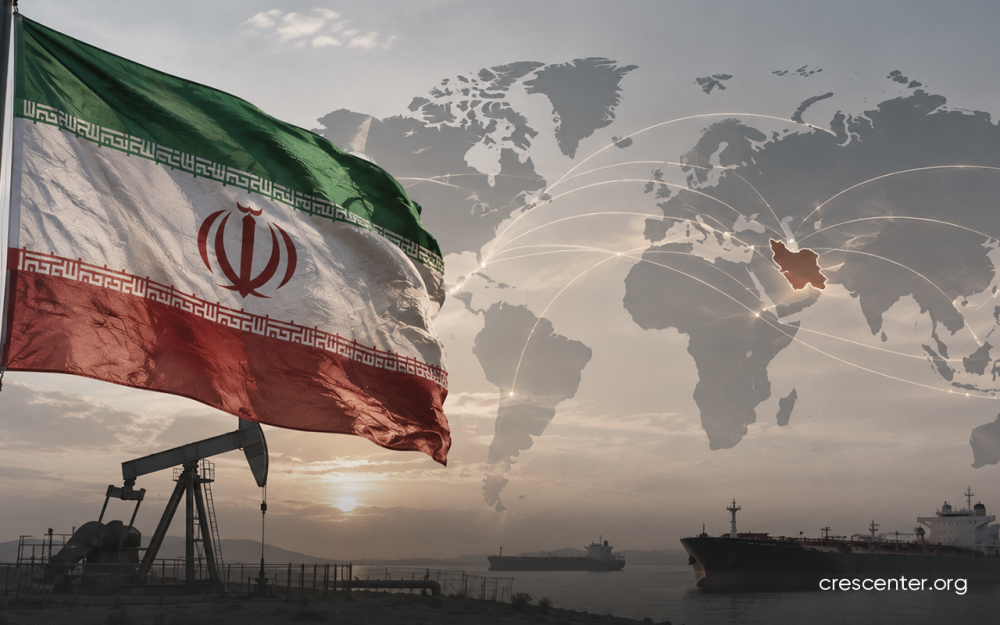
Conflicts in the Middle East demonstrate that energy security extends far beyond the supply of oil and natural gas. It is closely interconnected with trade routes, economic stability, international diplomacy, and environmental security. In particular, disruptions around the Strait of Hormuz can trigger volatility in global energy markets and prompt governments to reassess their energy policies. Sanctions against Iran, regional security tensions, and vulnerabilities in energy infrastructure further complicate this landscape.
This article examines the implications of Iran-related regional tensions for global energy security and assesses the extent to which climate diplomacy can remain effective under conditions of conflict. Its central argument is that climate diplomacy cannot, by itself, bring conflicts to an end. Nevertheless, it can contribute to long-term security by reducing dependence on fossil fuels, limiting environmental damage, and creating opportunities for international cooperation.
1. Energy in the Shadow of War: How Does a Regional Crisis Become a Global Challenge?
Energy is not merely a fundamental input for economic production; it is also a strategic asset that shapes states’ foreign policy choices and international relations. Disruptions to oil and natural gas supplies can extend beyond the borders of producing countries, affecting international trade, inflation, transportation costs, and household living standards.
The Middle East’s significance within the global energy system stems not only from its production capacity but also from its control over access to critical maritime routes. Consequently, security tensions involving Iran can generate economic risks even for countries that are not directly involved in a conflict. Energy markets respond not only to actual supply losses but also to expectations about future availability and the uncertainty created by potential disruptions.
The International Energy Agency (IEA, 2026a) highlights the central role of the Strait of Hormuz in global oil trade. A significant disruption at this strategic chokepoint could place upward pressure on oil prices while affecting natural gas supplies and maritime transportation.
However, the energy crisis cannot be explained solely by geopolitical tensions. Dependence on fossil fuels, limited alternative transportation routes, inadequate storage capacity, and the vulnerability of energy infrastructure to security threats are structural factors that can amplify the impact of a crisis. Addressing these challenges therefore requires more than diplomatic efforts to ease tensions; it also requires strengthening the resilience of energy systems.
2. The Strait of Hormuz: A Vulnerable Chokepoint in Global Energy Security
The Strait of Hormuz connects the Persian Gulf with the Gulf of Oman and the wider ocean system. Its strategic importance for oil and natural gas transportation makes security risks in the area a matter with potentially far-reaching global consequences.
According to the IEA’s February 2026 factsheet, approximately 20 million barrels of oil and petroleum products passed through the strait each day in 2025. This represented roughly one-quarter of global seaborne oil trade. A substantial proportion of the oil and petroleum products transiting the strait was destined for Asian markets (IEA, 2026a).
This concentration of energy flows helps explain why disruptions in the Strait of Hormuz consequences can have extending well beyond the region. Interruptions to shipping can increase insurance premiums and freight costs, strain supply chains, and trigger volatility in energy prices. Such effects are likely to be particularly pronounced in economies heavily dependent on energy imports.
Nevertheless, the scale of the consequences of a potential closure or significant restriction of transit would depend on several variables, including the duration of the disruption, the capacity of alternative transportation routes, the availability of strategic reserves, and the effectiveness of the international response. Potential scenarios should therefore be assessed under different conditions rather than presented as inevitable outcomes.
The Strait of Hormuz demonstrates that energy security cannot be achieved simply by securing sufficient fuel supplies. It requires diversified sources of supply, resilient infrastructure, emergency preparedness, and international coordination.
3. Iran’s Energy Policy: Sanctions, Security, and the Limits of Transformation
Iran possesses substantial hydrocarbon resources. However, international sanctions, constraints on access to financing, and restrictions on technology have created structural challenges for its energy sector. These conditions can affect the country’s ability to develop its energy resources, modernize infrastructure, attract investment, and participate in international energy markets.
The effects of sanctions extend beyond oil and natural gas exports. Financial transactions, technology transfers, foreign investment, and the modernization of energy infrastructure may also be affected. As a result, balancing energy production and domestic consumption, while implementing long-term investment projects, can become increasingly complex.
Nevertheless, Iran’s energy policy cannot be explained by sanctions alone. Domestic consumption patterns, energy efficiency, infrastructure conditions, economic governance, and the regional security environment are also significant determinants. Assessing these factors together provides a more realistic understanding of Iran’s energy policy options.
From the perspective of the energy transition, the central challenge is determining the cost and pace at which the existing fossil fuel-based system can be replaced by a lower-carbon alternative.
Renewable energy investment, electricity grid modernization, improved energy efficiency, and expanded storage capacity are essential components of this transition. Their implementation, however, requires financing, technical expertise, a stable policy framework, and international cooperation.
When conflict and sanctions intensify, governments may prioritize short-term energy security over long-term climate objectives. This can slow the energy transition. At the same time, the need to reduce dependence on imported fossil fuels and vulnerable transportation routes can encourage investment in domestic and renewable energy sources. The relationship between crises and the energy transition is therefore not linear; outcomes depend on policy choices and implementation.
4. Why Is Climate Diplomacy Constrained by War?
Climate diplomacy encompasses the international negotiations and cooperation through which countries seek to reduce greenhouse gas emissions, adapt to climate change, and strengthen climate finance. Its effectiveness depends on whether states can reconcile not only their environmental objectives but also their economic and strategic interests.
War makes such reconciliation more difficult. Security concerns, mutual distrust, and economic sanctions can limit countries’ ability to cooperate around shared objectives. As the protection of energy infrastructure and the continuity of fuel supplies become immediate priorities, long-term goals such as emissions reduction risk being relegated to the background.
This tension does not mean that climate diplomacy is ineffective. Rather, it highlights the need to integrate climate policy with security and economic resilience. Energy efficiency, renewable energy deployment, and stronger electricity grids can reduce emissions while also lowering dependence on external suppliers and strategically vulnerable maritime routes.
At COP29 in Baku, held under the United Nations Framework Convention on Climate Change (UNFCCC), countries agreed to a new climate finance goal aimed at increasing finance for developing countries to USD 300 billion annually by 2035, alongside efforts to mobilize USD 1.3 trillion per year from all sources (UNFCCC, 2024). These commitments illustrate that the energy transition depends not only on political will but also on access to finance and implementation capacity.
However, announcing international climate finance targets is not sufficient. Funding must be delivered in a timely manner, allocated transparently, and aligned with actual needs. These requirements become particularly important in regions exposed to conflict and geopolitical instability.
The realistic role of climate diplomacy is not to reconcile opposing sides overnight, but to create areas of shared interest that can reduce the environmental and economic costs of conflict. This requires viewing climate policy not as a separate issue from security, but as a component of long-term stability.
5. The Hidden Costs of War: Environmental Security
The environmental consequences of armed conflict can persist long after hostilities have ended. Oil spills, fires, damage to industrial facilities, contamination of water resources, and destruction of energy infrastructure can have serious and lasting consequences for ecosystems and local communities.
The Strait of Hormuz and its surrounding waters are particularly significant because of the intensity of maritime traffic. An environmental incident in this area could have far-reaching consequences. Oil spills can threaten marine ecosystems, fisheries, coastal economies, and water quality. The extent of the damage would depend on the nature of the incident, the volume of pollutants released, the available response capacity, and the speed of remediation efforts.
Environmental security is therefore not merely a matter of conservation; it is also an issue of human security and economic stability. Communities dependent on water resources, agriculture, and marine products may experience the indirect consequences of conflict for extended periods.
International cooperation in this area may remain possible even when broader political disputes cannot be resolved. Emergency environmental notification mechanisms, oil-spill response capacity, joint risk assessments, and scientific data sharing are potential instruments for such cooperation. However, sustainable environmental cooperation requires careful consideration of security conditions on the ground and the responsibilities of the parties involved. Documenting environmental damage, conducting independent assessments, and identifying the needs of affected communities are also essential components of post-conflict recovery.
6. Europe and Global Energy Markets: Is Diversification Enough?
Energy crises encourage governments to diversify their suppliers and transportation routes. However, securing new suppliers does not automatically eliminate existing energy dependencies. Shifting from one source to another may reduce certain risks while creating new economic, political, or infrastructural dependencies.
The IEA (2026b) notes that conflict in the Middle East is influencing energy investment decisions and increasing the importance of supply security, diversification, and domestic energy capacity. During periods of crisis, governments may reassess investments in renewable energy, nuclear power, energy efficiency, and alternative fossil fuel sources.
These options do not have equivalent implications for climate policy and security. When supported by appropriate infrastructure and storage solutions, renewable energy can reduce dependence on imported fossil fuels. However, insufficient investment in electricity grids and energy storage can make it more difficult to maintain system reliability. A greater reliance on fossil fuels may alleviate short-term supply pressures, but it can conflict with long-term emissions targets.
For Europe, the central challenge is to establish a workable balance between immediate energy security and long-term climate objectives. This requires an integrated approach combining emergency reserves, cross-border electricity interconnections, energy efficiency, renewable energy investment, and infrastructure resilience.
Energy security cannot be addressed through national policies alone. The interconnected nature of energy markets makes coordination and joint emergency planning increasingly important. International institutions can contribute by facilitating data sharing, assessing risks, and supporting the development of coordinated policy responses.
7. A Realistic Roadmap: Integrating Security and Climate Objectives
Three policy priorities stand out for reducing the global energy risks associated with tensions involving Iran and strengthening the effectiveness of climate diplomacy.
1. First, energy systems must become more resilient. Countries should diversify their energy supplies, strengthen critical infrastructure, invest in energy efficiency, and maintain up-to-date emergency preparedness plans. These measures can deliver economic and strategic benefits not only during crises but also under normal conditions.
2. Second, minimum cooperation mechanisms should be established to address environmental risks. Even in the absence of political agreement between parties to a conflict, opportunities for cooperation may exist in areas such as oil-spill response, marine pollution monitoring, environmental damage assessment, and humanitarian coordination. The credibility of these mechanisms depends on scientific evidence, transparency, and clearly defined responsibilities.
3. Third, climate finance must be translated into tangible investment. The transition of developing countries toward lower-carbon energy systems will remain constrained without adequate financing and access to technology. International funding should be allocated transparently, made accessible to countries in need, and linked to measurable outcomes. In regions with fragile infrastructure and elevated conflict risks, energy transition strategies should be designed alongside economic resilience and environmental security objectives.
The common principle underpinning these priorities is that energy security and climate policy should not be treated as competing objectives. In the long term, a resilient energy system cannot be built simply by securing larger quantities of fuel. It also requires managing demand more efficiently and diversifying the energy mix.
Conclusion: Climate Diplomacy Cannot End War, but It Can Shape What Comes After
Security tensions involving Iran expose the geopolitical vulnerabilities of the global energy system. The strategic importance of the Strait of Hormuz demonstrates how a regional disruption can have consequences extending from energy prices to international trade. Iran’s challenges relating to sanctions, infrastructure requirements, and energy transition further complicate the economic and political landscape.
Under these circumstances, expecting climate diplomacy to bring wars to an end on its own would be unrealistic. Climate negotiations cannot eliminate security concerns or override the strategic interests of states. Nevertheless, climate diplomacy can help limit the long-term costs of conflict through investments that reduce energy dependence, environmental cooperation, and climate finance.
The central challenge is to prevent short-term efforts to secure energy supplies from entirely displacing long-term climate objectives. Achieving this requires governments, international organizations, and financing institutions to address security and sustainability as interconnected priorities.
Ultimately, the success of climate diplomacy should be measured not only by the agreements reached, but also by the areas of cooperation that can be preserved under crisis conditions. Even in the shadow of war, progress remains possible in energy efficiency, renewable energy, environmental protection, and joint risk management. Such progress may not end a conflict, but it can help prevent the emergence of a more fragile, more polluting, and more costly post-conflict order.
References
Azerbaijan Ministry of Energy. (n.d.). Development of power engineering after gaining independence (the third stage after 1991).
Famoori, S. (2026, August 24). Environmental warfare in the Strait of Hormuz: The unfolding crisis of oil spills and regional security in the 2026 Iran-US conflict. CRESCENT Research Center.
International Energy Agency. (2026a, February). Strait of Hormuz: Factsheet.
https://www.iea.org/about/oil-security-and-emergency-ission/strait-of-hormuz
International Energy Agency. (2026b, May 28). Impacts of Middle East conflict set to reshape energy investment plans as disruptions put focus on security.
United Nations Framework Convention on Climate Change. (2024, November 24). COP29 UN Climate Conference agrees to triple finance to developing countries, protecting lives and livelihoods.
Merve Alemdaroğlu - Political and policy analyst with an interdisciplinary background in international relations, security studies, and development cooperation. She holds a Master’s degree in Development and International Cooperation Science from Sapienza University of Rome.