

Against the backdrop of the Russia-Ukraine war, now ongoing for more than four years, Tehran-Kyiv relations, marked by mutual accusations and diplomatic tensions, faced a fresh incident last week. The death of an Iranian sailor and injury of several others as a result of Ukrainian drone strikes on the Caspian Sea coast has put the bilateral relationship, one built for years on mutual distrust, to another serious test. This incident on the Caspian coast is not the first such event the two sides have gone through. In January 2020, the downing of a Ukrainian civilian airliner flying over the skies of Tehran by Iranian forces resulted in the deaths of all 176 passengers, with Tehran officially stating that it happened "by mistake" amid an attack on American forces in Iraq. This incident and Tehran's delayed admission played a crucial role in creating the mutual distrust between the two countries, a distrust that would deepen further with the start of Russia's full-scale invasion of Ukraine.
From the very first days of the conflict between Russia and Ukraine, Iran's position proved fairly decisive in shaping bilateral relations. The Iranian government, by describing NATO's eastward expansion policy in Europe as the main cause of the Ukraine conflict, indicated its indirect support for Russia's position. Although Iran's stance was one of the factors underlying mutual distrust in official relations, it did not pose major obstacles to the development of bilateral ties. Indeed, figures from just a year before the start of Russia's full-scale invasion illustrate that the total volume of bilateral trade reached as high as 680 million. However, the war that began in February 2022 laid the groundwork for an entirely new phase in Tehran-Kyiv relations.
Since the earliest days of the war, Ukraine's successful drone strikes exposed an obvious weakness in Russia's air warfare capabilities. Hence, Moscow turned to Iranian-made drones to strengthen its hand in the drone war. This inevitably led to tension along the Tehran-Kyiv axis. Condemning Iran's supply of long-range drones to Russia, Ukraine decided to revoke the accreditation of Iran's ambassador to the country and reduce the number of embassy staff. Iran, for its part, defended its position by stating that the drone sales to Russia had been agreed upon before the war. Nevertheless, relations grew even more strained after Russia's launch of military-industrial manufacturing capable of producing Iran's "Shahed"-type kamikaze drones in large numbers.
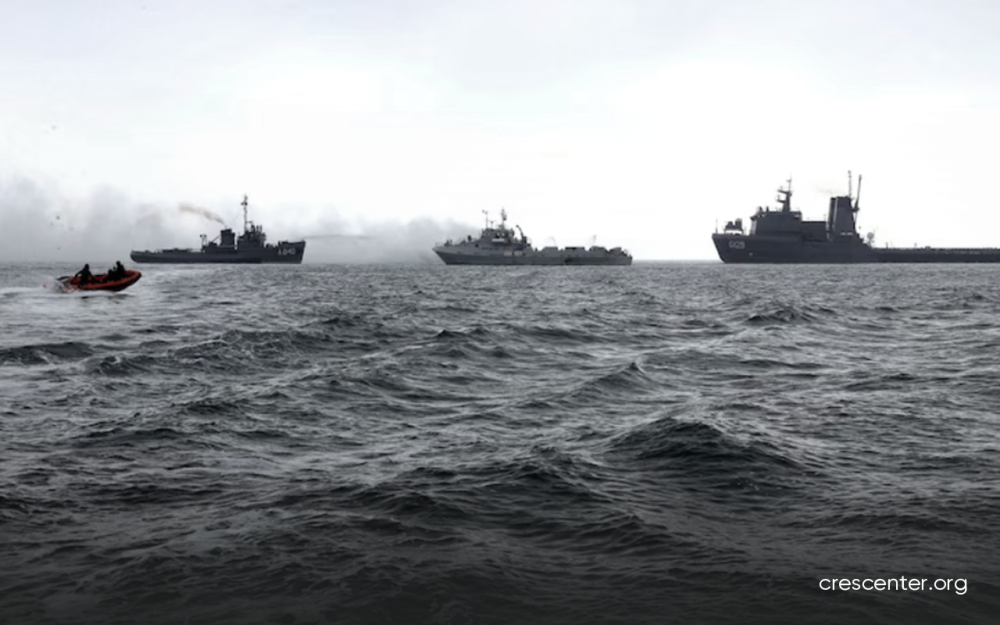
Ukraine’s drone attack of July 25 against an Iranian vessel sailing off the Caspian Sea coast brought the two sides into direct confrontation for the first time. The Ukrainian government issued a statement regarding the attack, in which one Iranian sailor was killed and several others wounded, saying the vessel was a legitimate target because it was transporting military cargo between Russia and Iran. Iran, by denying this, stated that this was an attack on the country's own commercial vessel and a blatant violation of the UN Charter. The head of the National Security Committee, Ibrahim Azizi, stated that this attack would not go unanswered.
As for the causes behind the attack that has led to relations becoming even more strained than in previous years, three different scenarios can be discussed. The first scenario, which is the most speculative one, is that, as a result of months of ongoing US-Israel strikes and the blockade of Hormuz, the strategic importance of the Caspian Sea for Iran has increased significantly. This "isolation" that Iranian vessels face in international waters has turned the Caspian Sea into a reliable logistics route for them. However, it appears that the US-Israel duo has also turned this body of water into a target to limit Iran's logistics capabilities. This thesis, which could also be described as a "merging" of wars, is one of the reasons behind the attack. Iranian Foreign Minister Seyyed Abbas Araghchi's claim that Israeli provocation lay behind this attack, and that it placed additional pressure on Iran's logistics capabilities, along with the fact that Iran's logistics capabilities in the Caspian Sea have come under threat, are among the factors strengthening this scenario. Another fact supporting this scenario is the statements made by Ukraine's ambassador to Israel. Ambassador Yevgen Korniichuk, in his statement, said that the vessel that was struck was carrying drone and missile components to Russia, emphasising that Ukraine and Israel were fighting on different fronts against "the same axis of evil."