
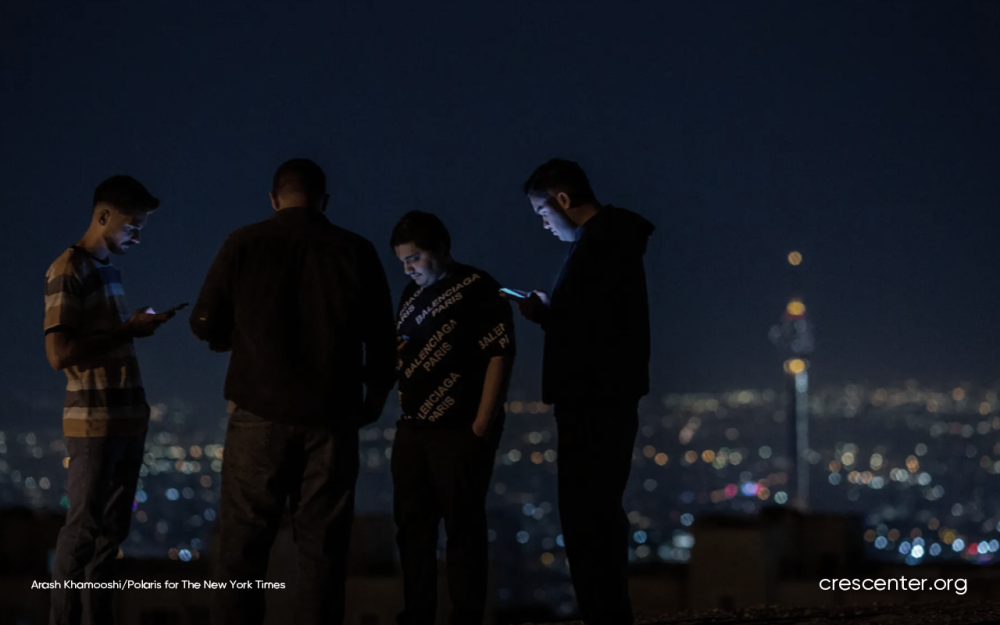
On January 8th, 2026, Iran experienced one of the most prolonged and severe internet blackouts in recent history. Following the escalation of conflict involving Iran, the United States, and Israel, the Iranian government imposed stringent nationwide restrictions on internet access. Officials justified these measures as necessary for national security and cyber defense during wartime. However, the shutdown rapidly evolved beyond a security precaution, becoming a significant domestic crisis that disrupted daily life for millions of Iranians.
It is important to note that internet access in Iran is essential for education, commerce, banking, news dissemination, and maintaining social connections. The blackout disrupted online businesses, separated families, and resulted in significant economic and emotional distress. As access to the global internet diminished, an underground market for illegal VPNs and restricted connections rapidly emerged.
This environment enabled certain individuals and groups to profit from the public’s urgent need for internet access. VPN services, previously affordable and widely available in Iran, became costly black-market commodities distributed through unofficial and frequently illegal channels. Simultaneously, unequal access to the internet exacerbated social frustration, as individuals with government connections or specific occupations reportedly received preferential access while the majority remained offline.
This article examines the domestic consequences of Iran’s internet blackout during the 2026 conflict, with particular attention to the emergence of the illegal VPN market and the intersection of economic hardship, censorship, and conflict in producing new forms of digital inequality. The analysis contends that the government’s internet policies during the conflict were not solely emergency security measures but elements of a broader system of digital control designed to reinforce political authority and manage public access to information. A particularly contentious issue was the severe restriction of internet speed and bandwidth, which many citizens believed indirectly benefited the expanding illegal VPN market. As internet access became increasingly limited, individuals were compelled to spend substantial sums on VPN services to access basic international websites and communication platforms.
The Cost of Connection
Public frustration intensified as many users observed their data allowances depleting rapidly after purchasing expensive VPN packages. Reports indicated that even substantial internet plans were exhausted within a short period. For instance, one Iranian user reported that 30 gigabytes of data were consumed after accessing only a few websites and basic Google pages. Such accounts fueled suspicions that the government was deliberately degrading internet quality to compel citizens to rely on unstable and costly methods for online access.
At the same time, Iranian officials pushed for replacing the global internet with a 'National Internet' system. In this setup, people would mostly use local platforms, approved apps, and government-run media, while international websites and independent sources would stay heavily restricted or blocked. Officials said this plan would improve cybersecurity and national independence, but critics saw it as a way to isolate Iran from the world and control all information.
Opponents of these policies contend that the primary objective is to maintain governmental authority rather than to safeguard public safety. Numerous observers and commentators argue that tighter control over internet access can reduce the visibility of domestic developments, limit online criticism, and restrict the flow of information to international audiences. In recent years, internet shutdowns in Iran have frequently coincided with protests, arrests, executions, and public unrest measures. Consequently, many Iranians perceive digital censorship as an integral component of a broader system designed to protect political interests and avoid accountability, rather than as a temporary wartime measure.
From this perspective, the 2026 internet blackout represented more than a restriction on communication; it became a symbol of profound distrust between the Iranian government and significant segments of society. While officials maintained that their actions were intended to protect national security, many citizens believed that the government was primarily safeguarding its own power, even at the expense of economic stability, social cohesion, and fundamental freedoms.
Two-Tier Internet System
Another source of public discontent during the blackout was the emergence of the 'White SIM Card' system. While the majority of the population faced stringent internet restrictions, blocked websites, and unstable connections, special SIM cards were reportedly distributed to political elites, senior officials, government-affiliated groups, and occasionally their families. These cards allegedly provided direct access to the global internet, circumventing the limitations imposed on the general public.
The existence of such privileged access underscored the inequitable nature of Iran’s internet policies. While millions of ordinary Iranians experienced digital isolation, political leaders and affiliated groups continued to enjoy open communication, access to international websites, and stable online services. This disparity reinforced the perception that internet censorship served to control the population and protect those in power, rather than to ensure national security. Additionally, the internet shutdown and communication restrictions caused significant emotional and financial distress for families separated by educational, professional, or migration-related circumstances. Many parents in Iran lost the ability to maintain regular contact with children abroad, while students outside the country struggled to obtain information about the health, safety, and economic conditions of their families during the conflict. In a society already facing economic hardship and political uncertainty, the government simultaneously promoted the use of local communication applications such as Bale, presenting them as secure national alternatives to foreign messaging services. However, public trust in these platforms remained low, as many believed that their conversations and online activities were subject to state surveillance. The fear of being monitored became widespread, particularly when discussing sensitive topics such as politics, war, the economy, protests, or government criticism. Consequently, digital communication in Iran shifted from a routine social activity to one characterized by control and anxiety.
Economic Fallout from the Blackout
The financial burden associated with international communication further intensified the challenges faced by ordinary Iranians. Maintaining contact with family or friends abroad often required paying for costly international calls, relying on unstable VPNs, or contending with unreliable internet connections. As a result, censorship, surveillance, unequal access, and economic hardship collectively contributed to a heightened sense of isolation during the conflict. This environment fundamentally reshaped social life in Iran by transforming communication, information, and personal contact into politically regulated privileges rather than universal public rights.
The internet shutdown in Iran hurt not just the local economy but also parts of the global digital economy. It negatively affected not only the domestic economy but also segments of the global digital economy and international internet infrastructure. According to NetBlocks and its Cost of Shutdown Tool, nationwide blackouts result in both direct and indirect economic losses by disrupting online commerce, international communication, digital services, cloud computing, remote work, advertising, and cross-border financial transactions, aspects of the global digital economy despite the ongoing sanctions. Millions of Iranians participate in online platforms, international freelance markets, software services, cryptocurrency exchanges, online retail, and communication systems associated with foreign companies. When the government severed control over the country’s connection to the global internet, thousands of international digital interactions ceased immediately.
NetBlocks estimated that Iran’s shutdown incurred direct costs of tens of millions of dollars per day, while broader iNetBlocks estimated that Iran’s shutdown costs tens of millions of dollars per day directly, with total losses reaching $70–80 million daily. But the effects went beyond Iran. International companies lost access to Iranian customers and markets, global advertising saw less traffic, cloud services and communication platforms were interrupted, and foreign businesses with Iranian partners that rely on stable international traffic flows and interconnected networks faced new challenges. Iran’s internet blackout disrupted global routing visibility, diminished regional internet traffic, and compelled monitoring organizations such as NetBlocks and academic researchers to document one of the largest digitally engineered blackouts in recent history. Subsequent academic studies revealed that Iran employed centralized filtering and null-routing systems to isolate nearly the entire country while technically maintaining partial international routing visibility.
The VPN Boom and the Censorship Economy
Another major result was the growth of the global VPN and censorship-bypass technology market. During the blackout, demand for VPNs, encrypted messaging, satellite internet, and other tools to bypass censorship rose sharply. Studies on Iran’s censorship showed a big jump in VPN usage and attempts to bypass restrictions. This made Iran one of the world’s largest emergency markets for these technologies, bringing profits to illegal VPN sellers, underground networks, and foreign tech companies.
The blackout also worried internet freedom groups, since it showed that a government could partly disconnect its whole population from the global internet while letting political elites keep special access through things like 'White SIM cards and Internet Pro.' This raised fears that other restrictive governments might use similar systems of tiered internet access and state-run national networks in the future.
Looking more broadly, the Iranian blackout showed that internet shutdowns are no longer just local political tools. In today’s connected world, large-scale internet censorship causes international economic problems, weakens trust in open internet systems, hurts digital business, and challenges the idea of the internet as a global, shared resource for everyone.