In an era characterised by fragmented supply chains, geopolitical uncertainty and the growing interest in developing economic corridors, a new partnership model is gradually taking shape across Eurasia. The growing relationship between Azerbaijan, the Gulf Cooperation Council (GCC), and Italy, which connects the GCC, the South Caucasus, and Southern Europe, is increasingly built on three pillars: capital, connectivity, and know-how.
The geo-economic dynamics of this framework lies in contrast to traditional geopolitics, which centre, primarily, on security priorities. Instead, this framework brings together many important elements including the financial power of the GCC, Azerbaijan’s strategic geographical position, and Italy’s industrial capabilities and technological expertise. Together, these strengths are generating a partnership that extends beyond the energy trade to encompass: infrastructure, logistics, manufacturing and investment.
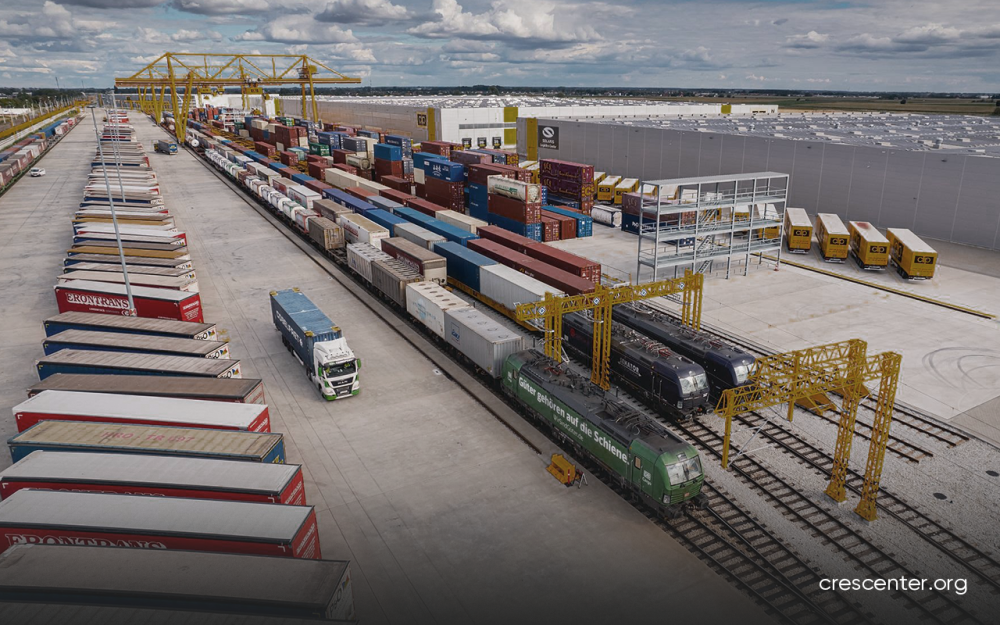
The unique position of Azerbaijan – at the intersection of Europe, Central Asia, and the Middle East – is well known. Over the past decade, Baku transformed from a predominant hydrocarbon exporter into a regional connectivity hub. The Southern Gas Corridor, including the Trans Adriatic Pipeline (TAP), hoisted Azerbaijan to the position of a key actor contributing to Europe's energy security, while the development of the Middle Corridor has reinforced its position in Eurasian trade and transport. Azerbaijan's gas exports to Europe are continuing to grow, with new supply agreements having been signed with both Germany and Austria–with further talks on infrastructure expansion underway.
Azerbaijan is now leveraging its transit position to attract foreign investment and, with the influx of capital, diversify its economy. International partners therefore view Azerbaijan not only as an energy supplier, but also as a gateway between markets. For GCC states, economic diversification strategies have accelerated the search for long-term investment opportunities beyond traditional hydrocarbon sectors. Sovereign wealth funds and state-sponsored enterprises are progressively directing their investment towards infrastructure, logistics, renewable energy, and strategic industries throughout Eurasia. Instead of simply providing capital, GCC states are emerging as core partners in infrastructure development, renewable energy projects and improving regional connectivity. This is part of a wider change in GCC foreign affairs, where the use of economic statecraft as a tool of influence and strategic positioning is on the rise.
Italy’s role in this network is often overlooked. Although it remains Azerbaijan’s main trading partner within the European Union (EU), the relationship has evolved far beyond energy imports, with the establishment of a wide range of other economic and trade links. Recent high-level meetings between Italian and Azerbaijani leaders have highlighted cooperation in sectors such as energy security, industrial production, infrastructure, connectivity and investment. The strategic value of deeper cooperation between Italy and European markets was emphasised by Prime Minister, Giorgia Meloni, who described Italy as a ‘gateway’ between the two regions, against a backdrop of regional instability. Italian companies offer advanced engineering capabilities, industrial expertise and technological know-how, which complement Azerbaijani resources and Gulf capital. This combination is particularly important in sectors such as renewable energy, transport infrastructure, industrial modernisation and advanced manufacturing.
The relationship is also increasingly multidimensional, with a growing number of dimensions that are adding to its complexity. For example, Azerbaijan's sovereign wealth fund, The State Oil Fund of the Republic of Azerbaijan (SOFAZ), has expanded its investments in Italy's renewable energy sector, including major solar projects. This illustrates how capital is now flowing in both directions. The most significant development may be the transformation of the partnership from an energy corridor into an investment corridor. Historically, relations between Azerbaijan and Italy revolved around oil and gas. Today, however, cooperation increasingly includes electricity transmission, renewable energy, industrial assets, logistics networks, and strategic infrastructure.
At the same time, Azerbaijani companies are expanding their presence in Europe. State Oil Company of Azerbaijan Republic (SOCAR)'s efforts to strengthen its position in the Italian energy market are indicative of a wider trend towards vertical integration and long-term industrial partnerships. The outcome is a more refined model of collaboration in which investment, infrastructure, technology transfer, and market access reinforce one another. The Azerbaijan–GCC–Italy framework is particularly noteworthy as it represents a form of middle-power cooperation that has been adapted to twenty-first-century realities.
None of the participants are seeking geopolitical advantage and instead contributes a unique competitive advantage. The GCC provides capital and investment capacity. Azerbaijan contributes its geographical location, transit infrastructure and energy resources. Italy contributes technology, industrial capabilities and access to European markets. Together, these contributions create a resilient partnership based on mutual economic interests rather than temporary political alignments. Rather than relying solely on traditional alliances, countries are forming networks that combine investment, infrastructure, and technological cooperation. The Azerbaijan–GCC–Italy triangle is still evolving, but its strategic logic is becoming clearer. In an increasingly fragmented world, the future may not belong to isolated national champions, but to flexible partnerships that can combine capital, connectivity, and know-how across regions.
Daniela Palumbo